Functional Strength Training: How to Build Real-World Strength That Lasts

Lifting weights can help with a lot of things: making you stronger, faster and more balanced, but in my book as a certified trainer and women’s fitness coach, the most important of all is to help you move through your everyday life more easily.
This is also known as functional strength training.
It’s become a bit of a buzzword in the fitness realm, but for good reason. Functional strength training is, in simple terms, training your body to move well in the gym, so you can translate those movements into your real-life. Think things like learning how to deadlift so when you pick your baby up out of their crib your lower back is protected, working on farmer’s carries so you can bring groceries in from the car in one trip (isn’t that the dream!?) or learning how to squat correctly so you can move that heavy piece of furniture in your living room knowing your not going to hurt yourself.
Each of these movements are things we can’t avoid in our everyday lives, but through exercises that focus on building functional fitness, they can become easier and help us stay injury-free as we age.
In addition to helping us move well, the benefits of functional training also include building stability, mobility, balance and coordination, and perhaps most importantly, gives us confidence both in our training and in our everyday life.
Functional strength training is a topic I looooovvveee to talk about. Let’s dive more into what it actually is, talk about what functional exercises are, what a program might look like and learn more about the benefits for long-term health and performance.
Quick Answer
Functional strength training focuses on movements that mimic everyday activities — like squatting, pushing, pulling, and carrying — to build strength, stability, and mobility. A functional workout uses compound exercises such as squats, deadlifts, lunges, rows, and presses to improve balance, coordination, and total-body strength. It’s one of the most effective ways to enhance fitness for real life, not just in the gym.
What Is Functional Strength Training?
So, what exactly is functional strength training?
This Bluey episode is one of my favorite visual depictions of how to build functional strength, especially if you’re a parent with little ones. It shows how workouts don’t have to be traditional to be successful. How you can use the equipment (your kids, even!) and time available to you and still to get in a pretty solid workout.
Think of this type of training as one that mimics natural, everyday movement patterns. Things like squatting as you take your laundry from the washing machine to the dryer, pressing as you water those high plants on the shelf, and lunging as you kneel to grab that toy off the ground.
It also means you’re working out across a variety of different planes of motion and conditions. The goal is to build well-rounded strength, in addition to mobility, stability, and coordination. This combination sets your body up for successful movement in your everyday life.
Unlike focused bodybuilding or machine training, building functional fitness is less about how much you can lift or what you look like, and more about how well your body is able to move. In your everyday life, this could look like having an easier time lifting your suitcase into an overhead bin, carrying your little one without pain, or climbing the stairs without needing to use the handrails. It’s also about setting you up for success when life’s unknowns happen, things like catching yourself when tripping on a pothole during your run or recovering without falling after losing balance off that last step of a ladder.
A training plan should always be individualized, but especially so for functional training. A mom chasing two little kids will likely need a different focus than the 30-something returning from knee surgery or the woman at the beginning of her menopause journey.
Curious about strength training more generally? You can learn more about strength training for women here.
Why Functional Training Matters for Women
As a fitness coach who primarily works with women, I love leveraging the benefits of functional exercise. It allows us to build incredibly individualized plans that help both support the phase of life they’re in and the habits around them.
Let’s be real, women are often juggling a million physical roles (not to mention emotional ones) at once. It’s not an easy task to go from shuttling kids around to a full work day, then managing a household, all while experiencing physical changes to the body, whether it's through pregnancy, the postnatal period, perimenopause, menopause, and beyond. To be fair, I know there are many, many households where much of the work is shared, but historically women have carried the brunt of much of the child-rearing and householding (but that’s a topic for another day).
Back to functional exercise benefits for women. Building functional strength can support each of these phases of life, and training functionally means we can adapt as we go. The movements we may do together pre-pregnancy will adapt to grow that little one and change again as postpartum life and motherhood kick in.
Regardless of the phase, though, functional strength building for women provides a strong foundation for things like posture, balance, and bone density, all of which are incredibly important ways to keep your body healthy and injury-free long-term.
Posture
“Rather than an ideal posture, what matters is being able to move in a variety of ways to perform different tasks effectively.” (Mayo Clinic)
Building a strong posture is incredibly individualized. While it may seem like standing up straight is the solution, in reality, understanding how you as an individual move, what your limitations are, and what may be contributing to that is all part of how we develop a strong postural foundation. The new mom who is breastfeeding for hours a day in a slouched position may require something different than the mom holding her toddler on one side the majority of the time.
Balance
Balance is an important part of training as we age. As we get older, our muscles begin to lose mass, and we begin to lose the strong brain/muscle connection our bodies have in younger years. This loss of mass and connection can mean we are less able to catch ourselves before a fall and less equipped to recover once it’s happened. Incorporating balance activities into strength training not only slows the loss of muscle mass, it also helps keep your brain and body talking.
Bone density
If you happen to find yourself on the floor post-fall, your bone density is what will determine if you’ll face a bone break. As we age and lose muscle mass, we also lose bone density. This is because bones and muscles work in tandem. The stronger your muscles ultimately are, the stronger your bones will be.
Next, let’s look at the movement patterns we should focus on to build real-world strength that matters.
Core Movement Patterns to Master
When it comes to the bare bones of fitness, I’d be remiss to not mention the six foundational movement patterns of everyday strength training. These are each important elements to anyone taking on a strength training program. They ensure that your body is moving, not only in functional ways that support you every day, but in a variety of planes of motion. In fact, if you boil strength training down, almost everything is a variation of one of these movements.
Squat: This is a sit-to-stand movement driven with a hinge at the knee. It targets the large muscles in our lower body, in addition to the core. Examples include a goblet squat, split squat, and squat jump.
Hinge: This movement hinges at the hips and targets the large muscles in the lower body, in addition to the core. It helps develop hip mobility and strength and protects the lower back when done correctly. This is a perfect example (1:40) of a functional real-life hinge (not to mention a classic movie!). Examples include deadlifts, single-leg deadlifts, and kettlebell swings.
Lunge: Lunges work the big muscles in the lower body while improving balance and building unilateral control. Examples include forward, side, or reverse lunges.
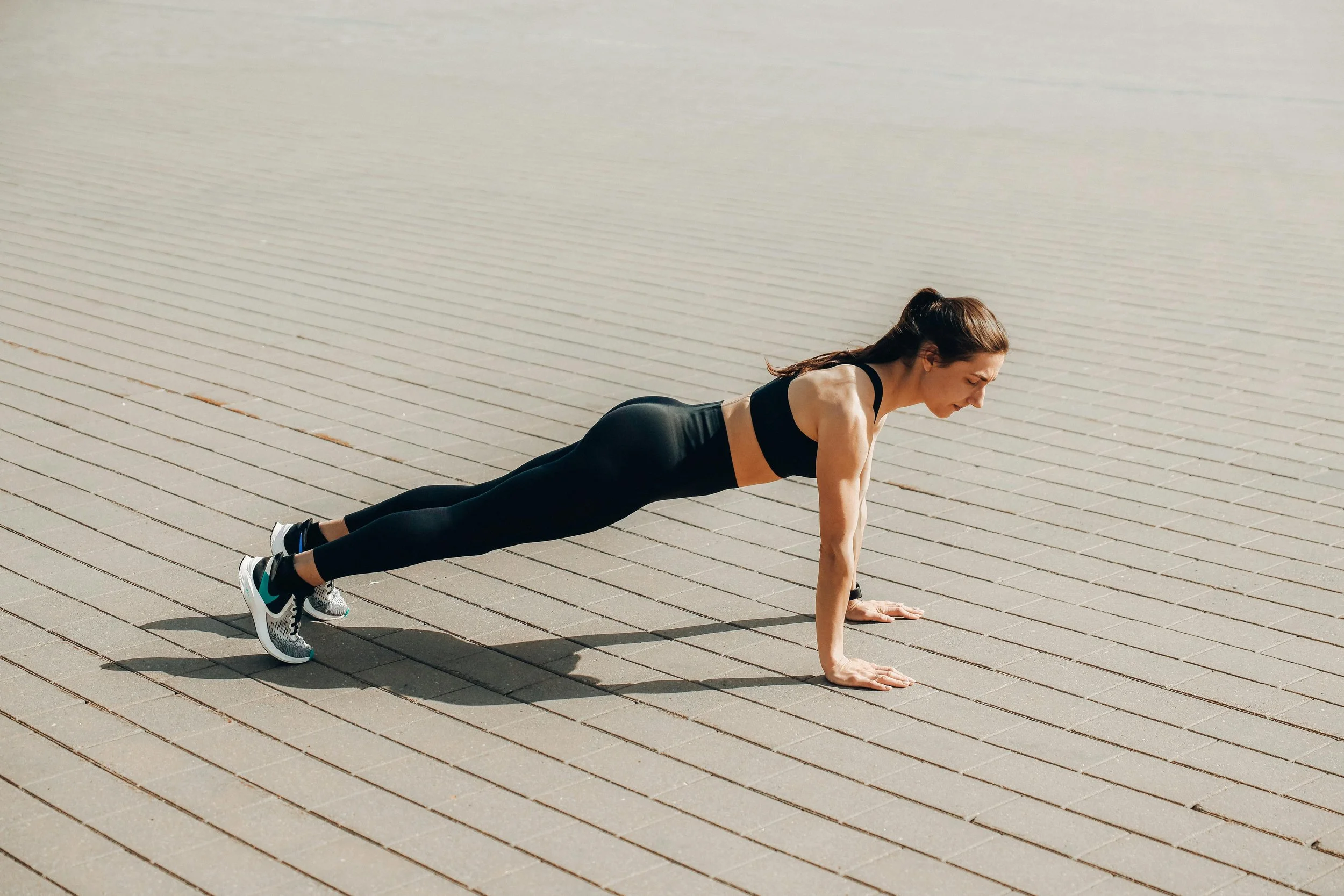
Push: Anytime you’re pushing your body or a weight away from you, you’re in a push. A push helps to build chest and shoulder strength. Examples include push-ups or chest presses.
Pull: Pulls bring weight away from the body. They help to support a stable trunk and build the back and shoulder muscles. Examples include standing rows or reverse flies.
Carry: This movement builds core strength and stability, as well as grip. It’s also one of the easiest movements to see functional exercise in (in my opinion!). Think of how you carry groceries into your house, it’s likely a farmer’s carry! Examples include farmer’s carries or suitcase carries.
Benefits of Functional Strength Training
Now that we’ve looked at what functional strength training is and the types of exercises that are included, let’s take a deeper look at why it’s beneficial.
The ethos of functional strength building is focused less on how much you can lift and more on how well you can do it. Exercises in any functional strength program should mimic real-world movements and aim to enhance flexibility and mobility, too.
Focusing on building real-world strength can help in a variety of ways. Aside from the fact that it will help you move more safely in your everyday life by enhancing things like balance, coordination, and posture, as discussed earlier, it can also play a big role in reducing the risk of injury and joint pain.
Strength training puts pressure on muscles to get stronger, which then places more pressure on bones, thus strengthening them as well. Maintaining strong bones is incredibly important as we age. Bone and muscle mass tend to peak for women in their 30’s and then begin to decline (American Medical Association). While we can’t fully stop the aging process, adding things like strength training to the mix is a great way to slow it down and stave off the potential for osteopenia, osteoporosis, or injury. Functionally, it also means that if something like a fall or injury should happen, a bone break is less likely.
In my years as a fitness coach, I’ve been lucky to witness perhaps one of the most underrated benefits of functional strength training: confidence building.
Seeing my clients, most of whom are women who are new to or getting back into strength training, gain confidence in what their bodies can do and how they move, is incredibly rewarding. Hearing a mom tell me her back hurts less when she’s carrying her baby or a woman approaching menopause starts to recognize the brain/muscle connection in her everyday life is a testament to the value of this type of movement.
“I’ve always been intimidated by gyms, especially the equipment, but strength training has given me such confidence in my life. What I didn’t realize is how much stronger this commitment would make me mentally.” - Jemma C., Co-Founder and Chief Creative Officer
Common Mistakes to Avoid
Functional strength training is great for all levels, especially beginners. That said, there are a few mistakes you’ll want to avoid as you get started. Working consistently with a coach can help with each of these common issues; just knowing them is also beneficial if you’re looking to take up training on your own.
Ignoring form
Form is key to any exercise, whether you’re working out to feel better in your everyday life or trying to lift as heavy as possible. Having proper form not only ensures you’re getting the most out of the exercise you’re doing, but it’ll also help you prevent injuries in training and outside of it. Working with a coach is a great way to keep your form on point and make sure you’re understanding each movement in the gym so that you can leverage the same form and movement outside of the gym.
Quality over quantity
Form ensures you’re executing a movement safely, while focusing on quality helps you get the most out of it. Quality over quantity means that you’re only progressing a movement once you’ve fully mastered it, and you’re taking it slowly with control. A good rule of thumb if you’re looking to gain strength is to aim for 5 to 8 repetitions of a movement, with the final 2-3 repetitions feeling challenging and like you can’t do much more.
Many studies have shown how quality strength training can positively impact injury prevention. This 2018 study even found that a “10 percent increase in strength training volume reduced the risk of injury by more than four percentage points.” But, that’s with the understanding that you’re training smart and not skipping the rest day, which brings me to my next point.
Skipping Recovery
Here’s a tip I repeat to my clients often: the rest day is PART of the training plan. In fact, your body’s working hard on a rest day. It’s actually when you make big gains.
The fibers that make up your muscles experience teeny tears when they are stressed through exercise. When muscles are stressed, they become inflamed. When inflammation is compounded, those muscle fibers never get the chance to heal. This could mean the muscles that would normally support you become overtired and farm that work out to different muscle groups, leaving you primed for an injury. But, when you take a recovery day (or days), those fibers finally get the chance to heal, which, ultimately, allows you to get stronger and helps stave off injury.

How to Incorporate Functional Training into Your Routine
It can feel daunting to figure out where to start with strength training, let alone adding a word like “functional” in with it. As a trainer, I tell my clients to “keep it simple.” Start with a movement routine that works with your schedule, do it consistently, and ask for help when you are ready or need it. The best routine you can do is one that you will do. That’s how we create habits that lead to positive changes.
That said, here are some suggestions if you’re looking to maximize your workouts. If you’re looking for general strength, working out 2-3 times a week with functional movements is a great place to start. If you can combine it with some cardio on off days, that’s great.
Since functional strength building is less about lifting as heavy as possible, using bodyweight, free weights, or resistance bands are all great ways to incorporate resistance challenges into your routines.
If you want to take it even further, tracking your improvements when it comes to lifting, control, mobility, and endurance are all helpful additions. You can even leverage the help of a digital device such as a WHOOP or Apple Watch. This can also allow you to optimize your workouts and your recovery (a whole post for another day!).
FAQs
-
A functional strength training workout is essentially any workout that mimics movement patterns in your everyday life. Think about things like carrying groceries (farmer’s carry), picking your child up out of their crib (deadlift), or picking that heavy box up from the floor (squat).
-
If you’re looking for general strength, working out 2-3 times a week with functional movements is a great place to start. If you can combine it with some cardio on off days, that’s great. But, like any form of exercise, what you can fit in and do consistently is going to give you the most benefit.
-
Functional strength training is a great way for beginners to get used to strength training. It’s focused more around setting you up for success with movements that you’re already doing in your everyday life and does not require a ton of equipment, though it can absolutely be added when you’re ready.
-
Just you! While you can, of course, incorporate equipment like free weights, bands, or machines into your workout, you can also get in a great functional strength workout with just your body. If you’re new to strength training, I recommend starting with bodyweight work and progressing to using weights as you feel more comfortable in the movements.
-
The ethos of functional strength building is focused less on how much you can lift and more on how well you can do it. Exercises are aimed at mimicking how you move in your everyday life. While functional strength building is great for all levels, it’s a wonderful option for beginners who aren’t as familiar with strength training or don’t want to use gear.
Think about the many movements you do in your everyday life, from carrying to bending, lifting, and pulling. Now think about doing all of those movements with confidence that you can do them, and, even better, that you can do them well. This is functional fitness training.
This type of training will help you feel strong and capable in the ways that matter most, from improving your real-world strength and mobility to enhancing your balance and posture, reducing your injury risk, and perhaps most importantly, boosting your confidence in your everyday movements.
Participating in strength training is a huge win for your body, but the confidence that it can bring mentally can translate far beyond the gym, too!
Ready to build real-world strength? Let’s do it! Book a free intro consult, and let’s design a personalized plan that fits your life and schedule.