Prenatal Workout: Safe and Effective Exercises for Every Trimester

I remember the first workout I did after finding out I was pregnant. At that point, my body hadn’t physically changed much, and I wasn’t feeling tooooo many first-trimester symptoms yet, but I remember feeling fragile.
Not in an my body isn’t strong way, but in an I’m not sure how to move with this new little being growing in my belly” way. I had thoughts like…
Is it OK to continue to lift heavy?
Can I lie on my stomach?
Is lifting weights over my head bad for me now?
All completely valid questions, but I felt unsure and, to be honest, a little embarrassed about how to proceed.
Fortunately, as time went on, I slowly figured out what a prenatal workout should look like. But I wish in those early days, and beyond too, I had known that not many adjustments were needed in that first trimester – and even in the later ones, the body, especially if it’s used to working out, is often able to continue to be challenged physically.
In fact, continuing to workout – and prenatal strength training in particular – has a ton of benefits during pregnancy. Benefits like better sleep and mood, more energy, sustained strength as your body changes, and even a smoother delivery and recovery. It may just require some slight modifications to keep you and baby safe.*
This time in pregnancy was part of the impetus for why I wanted to become a certified pre- and postnatal fitness coach. If, as a fitness coach, I was confused about what constituted a safe workout during pregnancy, I figured I wasn’t alone. Since then, I’ve been fortunate to coach and develop pregnancy fitness plans for many women in the pre- and postnatal periods of life, so they can maintain control of their workouts, even as their bodies and lives change.
In this post, we’ll talk more about how to adapt your workouts during pregnancy, including through each trimester, how to keep your body safe, and maybe most important of all, how to make sure you’re listening to it as your body changes.
*This is all provided you have the appropriate clearance from a doctor. While I am a certified pre- and postnatal fitness coach, I am not a doctor. Please make sure you have been cleared for exercise.
Quick Answer
A prenatal workout should focus on strength, stability, and mobility using low-impact, functional movements. Safe prenatal exercises include squats, modified planks, glute bridges, rows, and walking. Avoid lying flat on your back after the first trimester, high-impact moves, or overheating. Aim for 3–4 moderate workouts per week and focus on feeling strong and supported, not pushing for PRs.
Benefits of Prenatal Workouts
It may feel like a daunting task to understand how to adapt your workouts in pregnancy (stay tuned for more on that side of things), but the physical and mental benefits can’t be dismissed.
At bare minimum exercising while pregnant, is a great “prehab” for giving birth and can set you up for a successful postpartum journey. In fact, working out during pregnancy may even help decrease the amount of recovery time needed post-birth. Developing a prenatal fitness routine can also help you avoid pregnancy-specific contraindications like high blood pressure and gestational diabetes, as well as physical limitations such as back pain, excessive weight gain and injury.
According to Girls Gone Strong, “physical activity during pregnancy can improve a woman’s ability to carry extra weight more comfortably…strength training specifically can help improve movement patterns and may reduce the risk of musculoskeletal injury during pregnancy.”
Mentally, a prenatal workout routine can offer a reduced risk of depression and anxiety, improve mood and boost your overall sense of well-being. Sleep, which can be a challenge, especially in the later phases of pregnancy, is generally better with a consistent exercise routine. That improvement alone can have a huge impact on a pregnant woman’s mental state, as well as what she feels physically capable of doing.
All this said, before starting any workout routine, please talk to your doctor to ensure you’re cleared for exercise. If you’re working with a trainer, stay in close communication with them throughout your sessions (and even in between, if needed) so they can understand how your body is feeling and adapt your workouts accordingly.
Remember modifications can be a powerful tool in this phase of life! You can read more about modifications in the prenatal and postnatal phases here.
Exercise Safety During Pregnancy
Let’s dive deeper into the nitty-gritty of pregnancy exercise safety, because, as I mentioned, even as a fitness coach myself, I didn't feel equipped to understand how my workouts needed to adapt during pregnancy. Side note: It’s one of the biggest reasons I’ve since invested in education around this topic and become a pre- and postnatal coach.
Get medical clearance
First and foremost, always check with your healthcare provider about exercising during pregnancy, and ensure you’re cleared to workout. Generally, fitness for pregnant women is seen as a positive way to feel better in your body and mind throughout the process, but there are circumstances that may arise that mean you need to pull back or stop exercising altogether.
Listen to your body
Your body knows best! Listening to how your body is feeling is incredibly important in any exercise routine, but especially during pregnancy. There may be days when you feel like your pre-pregnancy self in your workouts and days where things feel laaaaggggyyyy. This is normal, and listening to your body is the best way to adapt your workouts to fit your pregnancy.
In general, you want to avoid overexertion in pregnancy. It’s not really the time to see how far you can push your body (it’s already being pushed pretty hard, afterall!). The “Talk Test” is an easy and simple way to understand your exertion. It means you should be able to hold a conversation during the hardest parts of your workout. It’ll ensure your exertion is productive while keeping you safe.
Remember, if exercise isn’t feeling good, it's OK to stop (this goes for pregnancy, and pretty much any other time in life).
Focus on the core and pelvic floor
You hear a lot about the core and pelvic floor in pregnancy, and beyond. These are important areas to strengthen at any time of life, but especially during pregnancy. Having a strong pelvic floor and core will help keep your body strong and stable and set you up for success in labor and delivery, as well as for your postpartum journey. Stay tuned on this one, we’ll talk more about it later in this blog.
Watch for warning signs
Feeling dizzy, having pain, or experiencing contractions are all indicators that it's time to stop your workout. Feeling like you don’t want to exercise is also a perfectly valid excuse. And as with any workout, always make sure you’ve had enough nutrition and are properly hydrated.
Read more about ACOG’s exercise safety guidelines here.
Core Components of a Prenatal Workout
So, what makes up a great prenatal workout?
Honestly, it’s many of the movements that make up a normal workout, with some changes here or there. As I mentioned earlier, always make sure to check with your healthcare provider before starting a workout regimen. General guidance for pregnancy is to not start anything new and to take it slightly lower impact than you normally would (remember that “talk test” I mentioned earlier?). If you’re someone who has had a consistent strength training routine, you’ll likely be able to carry on with what you’ve been doing with some slight modifications. And, if you’re just starting out, after getting clearance from your doctor, start with low-impact, bodyweight movements.
Strength Training
It’s generally recommended that pregnant women get 150 minutes of exercise throughout the duration of a week. Ideally, that comes in the form of a few forms of exercise: walking, jogging, strength training, etc.
When it comes to strength training, I suggest aiming for 2-3 workouts per week. And, rather than focusing on how much you can lift, focus on building strength for foundational movements that are functional and help to build both strength and stability. Exercises like deadlifts, squats, lunges, rows, and presses are all great places to start.
Cardio
Your cardio routine may look a little different during pregnancy, and that’s OK! It may also shift and change as you go, and there’s nothing wrong with that either. Remember to use the “talk test” as your guide and make sure you're cleared for exercise, especially if you’re aiming for cardio that is higher impact. Low-impact cardio options, like walking, cycling, swimming, and elliptical, are great options and can help alleviate some of the aches and pains that may come up as you get further into pregnancy.
Core and Pelvic Floor Work
Core and pelvic floor work is incredibly important for any well-rounded fitness routine, especially for someone in the prenatal stage of life. Consider this type of work helping to keep your body strong and stable as it changes, but also as a sort of “prehab” to set you up for success in the birthing and postpartum stages.
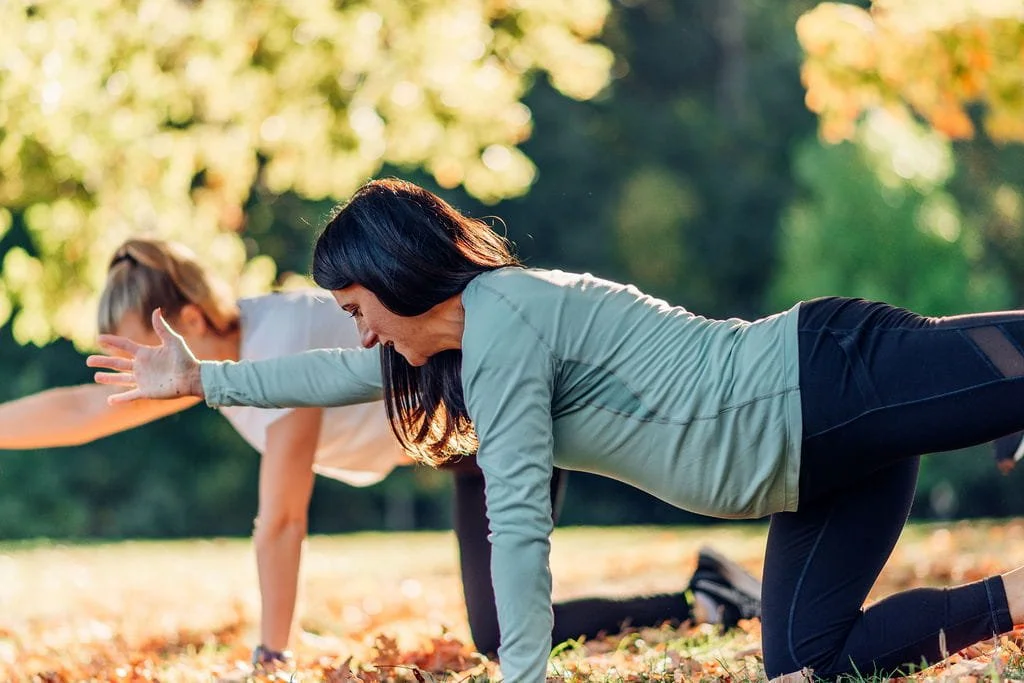
Focusing first on gentle breath work (like connection breathing) to ensure you’re properly activating through your core and pelvic floor is incredibly important. From there, leveraging exercises that focus on building deep core strength and anti-rotation capabilities (like Pallof Presses, Bird Dogs, and Side Planks) are great ways to set your body up for success.
Mobility and Recovery
Mobility work is important for any fitness routine, but can be especially helpful during pregnancy to help alleviate pain and tension that may arise as your body changes and your belly grows.
Incorporating gentle stretching or yoga and foam rolling into your routine can help reduce stiffness and improve circulation. Keep in mind, however, that your body is more flexible during pregnancy due to the increased Relaxin in your body to help prepare for the birthing process, so you’ll want to be very aware of how far you’re pushing in your stretches.
Above all else, when it comes to exercise, remember to be flexible. Pregnancy is an ever-changing process, and you might feel great one day and awful the next. Exercise based on how your body is feeling and what it needs. Some days it may be some strength training or high-impact cardio, and others it may be some gentle mobility exercises, or some extra rest. This is the time to give yourself and your body grace. You’re growing a whole, entire human afterall!
How to Adapt Exercises by Trimester
All Trimseters
Before we dive into workouts for each of the specific trimesters, let’s first talk about a few things you’ll want to make sure to incorporate across each stage of your pregnancy.
Connection Breath
Leveraging this kind of breathwork is incredibly important in both helping your body feel calm and in training your pelvic floor and core to work together. It also helps to develop stability through the core during strength training movements. This breathwork will set you up well for the birthing process (breathing will be a key component!) and postpartum recovery.
Gentle Mobility
It’s recommended that pregnant women incorporate flexibility training into their routines 2-3 times per week, or daily if possible. Adding it before a strength training session is a great way to build the habit, improve your range of motion, and prepare your body for the movements ahead.
Alignment
Posture is an important thing to pay attention to in pregnancy. While you may not notice it in the first or even second trimesters, by the third, you may see some changes to your resting posture and how your body stands. In general, “good posture” equates to your rib cage being stacked over your hips. Internally, that means your diaphragm is stacked over your pelvic floor. This puts your body in the ideal position for your core to stabilize.
Regardless of the exercises you’re doing, remember to keep movements controlled and work with your breath. Holding your breath is going to put undue pressure on your body and restrict oxygen, so make sure you’re getting good airflow during your workouts.
Let’s look now at some things to keep in mind for each trimester:
First Trimester (Weeks 1-13)
Exercise in the first trimester of pregnancy can look a lot like what you’ve been doing pre-pregnancy, provided you have clearance to workout from your doctor, and you are feeling well. This is a great time to focus on building full-body strength and creating an exercise routine that is consistent. Having a consistent routine in place before the more impactful physical symptoms of pregnancy kick in will help keep your energy levels up and help you stay in tune with your body as more changes occur.
Remember that you’ll want to keep the “talk test” I mentioned earlier in mind for any cardio work, and general guidance for pregnancy is to not add anything new to your routine that you haven’t done before.
Second Trimester (Weeks 14–27)
Hitting the second trimester can mean some of the symptoms of the first trimester, like fatigue and nausea, subside a bit, which is great. This can be a time, however, when you start to notice your body changing. Maybe your belly starts to show a bit more, or you start to notice aches and pains in new places.
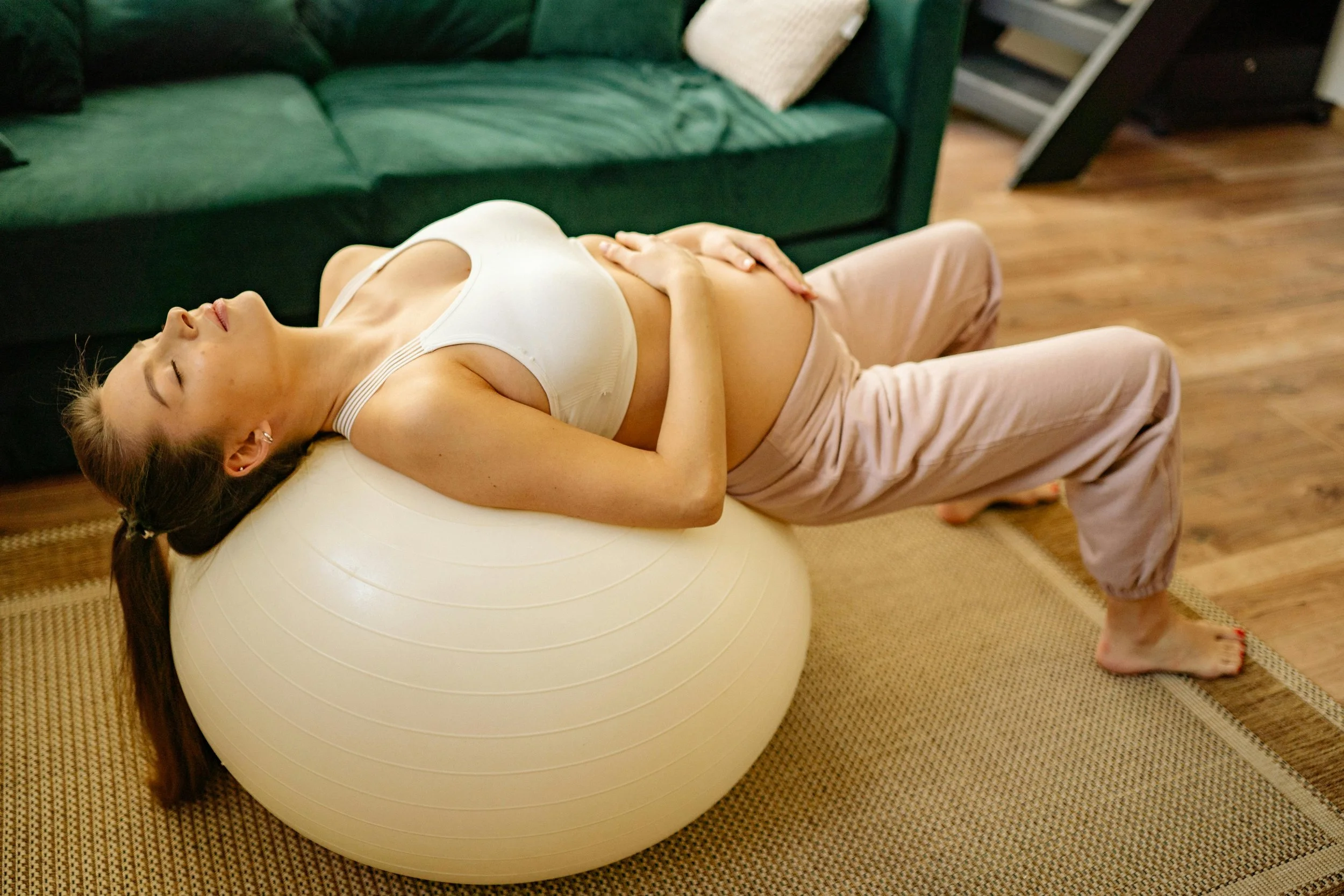
In this stage, you may find exercising, especially on your back, leads to dizziness or nausea. In that case, you’ll want to modify by lying in an inclined position on a wedge or pillow to relieve pressure in the lower body, or focus on exercises that are seated or standing.
For any seated or lying core exercises, you’ll want to be aware of any doming (aka diastasis) that is happening in your midsection. While it is normal for some amount of diastasis to occur in pregnancy, core work that creates doming can exacerbate things. As your belly grows, you will also want to avoid traditional plank exercises (side planks are still okay!) as the isometric movement, combined with gravity, can negatively impact your breathwork, exacerbate diastasis, and put a lot of extra pressure on your spine.
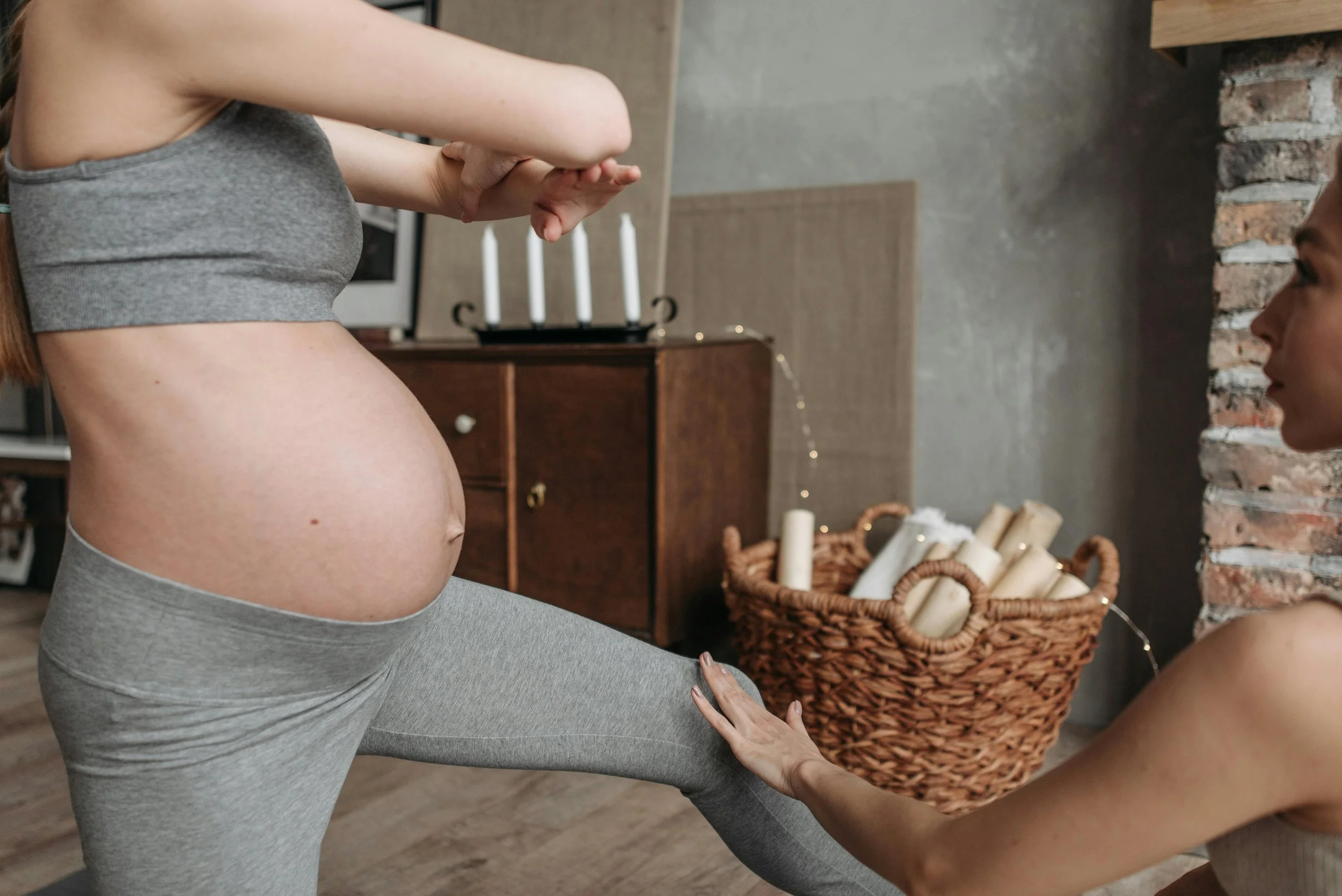
Generally, in the second trimester, focusing on form and full-body strength movements that target proper posture and help strengthen both the pelvic floor and core will put you in a good position as you progress in your pregnancy. Balance work (hello, lunges!) is also great to integrate, just make sure you’re doing so safely.
Third Trimester (Weeks 28–40)
The third trimester of pregnancy is a whole new ballgame. Your energy levels and the way your body feels may shift from day to day (or honestly, hour to hour). Make sure you’re listening to how you’re feeling and moving in ways that make your body feel good. Continue to focus on your connection breath as well as alignment, as it may have shifted a bit from when your pregnancy began.
The third trimester is a great time to continue to focus on functional strength. These are movements that you’ll use in labor and caring for a baby, but are also big hitters in strength training. Think squats, deadlifts, lunges, and arm work. You’ll also want to keep in the core movements from your second trimester, while continuing to watch for doming.
Looking for a more personalized pregnancy workout experience? Let’s chat! Schedule an intro call.
Exercises to Avoid During Pregnancy
As I mentioned earlier, I felt a little daunted by pregnancy in the beginning, but the more I learned about the body and the changes it was taking on, the more trust I felt in what I was capable of doing. Pregnancy can be a time of change, but it does not mean you are fragile.
As someone who has always thrived on pushing myself physically, the biggest challenge I found during pregnancy was pulling back. I had to learn how to slow things down, quiet my ego, and actually listen to what my body was saying to me. In my first pregnancy, it meant sticking, for the most part, with the routines I was already doing (with a few modifications). This included both strength training and running.
When I found myself pregnant for the second time, everything changed. My body did not love the impact, and running became my least favorite activity. Walking and yoga became my new best friends, and while I kept up my strength training for the most part, some days I scrapped it.
So, here’s your friendly reminder that every day might feel different and to remember that no two pregnancies are the same.
All that said, here are some things to consider in pregnancy.
High Impact or Contact Sports
While higher impact movements can be okay if you’ve been doing them (and you have proper clearance from your doctor), you’ll want to avoid activities that are high-contact or have a risk of falls. This includes activities like skiing, soccer, basketball, horseback riding, as well as some HIIT movements and kettlebell work. If you’re not sure, ask your health provider.
Abdominal Strain
As I mentioned previously, throughout your pregnancy, you’ll want to make sure you’re avoiding movements that put undue strain on your abdomen or create coning, doming, or a bulge near the linea alba. The coning or doming that occurs can exacerbate diastasis, which is a common part of pregnancy when the abdominal walls change in length to make space for the baby. This usually includes core exercises on your back, as well as those that put you in a traditional plank position.
Not Breathing
Breathwork is key to all exercise, and never moreso than in pregnancy. Proper breathing ensures your body is aligned and that your pelvic floor and core are working together to stabilize you. Not breathing not only takes this all away, but it can also spike your blood pressure, which can leave you feeling dizzy.
Working to exhaustion
Your body is already doing a TON of work in pregnancy. You’re growing a whole human afterall! So, this may not be the time for the hardcore, full-on workouts of your past. Make sure to use the “talk test” and do exercises that leave your body feeling more energized, rather than depleted. Remember that working out during pregnancy is a great thing to do, and even if you need to pull it back, you're doing so to keep your workouts both effective and safe so you can continue to move the way you want to throughout your pregnancy.
Sample Weekly Prenatal Workout Plan
ACSM and ACOG recommend pregnant women engage in a total of 150 minutes of moderate-intensity exercise per week. That can be spread out however works best for you, whether it's short workouts each day of the week or longer exercise sessions over fewer days. Here are a few examples of what it could look like:
Example 1:
Monday: 30 minutes of full-body strength
Tuesday: 30-minute walk
Wednesday: 30 minutes of prenatal yoga
Thursday: 30 minutes of full-body strength
Friday: 30 minutes of light cardio (swim, elliptical, or walk)
Saturday: Mobility and stretching
Sunday: Rest
Example 2:
Monday: 45 minutes of full-body strength
Tuesday: 20-minute jog
Wednesday: 20 minutes of prenatal yoga
Thursday: 45 minutes of full-body strength
Friday: 20-minute jog
Saturday: Mobility and stretching
Sunday: Rest
Example 3:
Monday: 20 minutes of full-body strength + 20-minute walk
Tuesday: 10 minutes of prenatal yoga
Wednesday: 20 minutes of full-body strength + 20-minute walk
Thursday: 20 minutes of light cardio (swim, elliptical, or walk)
Friday: 20 minutes of full-body strength + 20-minute walk
Saturday: Mobility and stretching
Sunday: Rest
Keep in mind these are recommendations, which means they may or may not feel right for your body, and they may change as you go. You ultimately know what makes you feel best. If you notice your routine is leaving you feeling extra tired and groggy, consider pulling back or changing it up altogether.
Tips for Staying Consistent
Maintaining a consistent exercise routine during any phase of life can be a challenge, let alone during pregnancy! Fortunately, there are many things you can do to set yourself up for success in your prenatal fitness routine (and they’ll even help beyond this stage too!).
Start Small
If you’re building a routine or looking to get back into one, starting small is the fastest way to success. Start by adding a short amount of movement (20-30 minutes) a couple of times a week. Once you have that down, build on it by extending the amount of time you're exercising, then the number of days (or vice versa). During this time, focus on the small wins that come. This could look like tracking your consistency, noticing that your aches and pains feel better, or that you have more energy.
Define Success
Pregnancy is a whole new ballgame when it comes to fitness. The goals you might have had before may need to adapt and shift, and there’s nothing wrong with that! Pregnancy can be a great time to focus more on how your body feels than on the traditional goals of fitness. Maybe it’s tracking consistency in your workouts over how much you’re actually lifting, counting miles of walking rather than jogging, or making sure you get a bit of stretching and mobility work in each day.
Create Your Team
Finding accountability can be a huge help in creating a fitness routine, especially during pregnancy. It can give you a sense of community, more confidence in your movements, offer a little more joy in your workout, and help you stay accountable. And, there are many ways to do this! From meeting a friend for a walk, joining a prenatal class (or a regular one with some modifications), or working with a coach.
On that last point, if you’re interested in a more personalized approach to your prenatal journey, let’s chat! I love helping soon-to-be moms find routines that work for their bodies and schedules. Set up an intro call using this link.
FAQs
-
The best prenatal workout for each trimester is the one you can do! Finding consistency in exercise throughout your pregnancy is a great way to keep your body feeling happy, strong, and safe in this changing season. That said, as your pregnancy progresses, you’ll want to make some adjustments to ensure you’re not putting undue stress on your musculoskeletal system and are keeping you and your growing baby in the healthiest positions as you exercise.
-
Yes, absolutely! Strength training during pregnancy can help improve mood and energy levels as well as keep your body feeling good as it changes with each trimester. That said, you may need to make adjustments to your programs based on how you’re feeling. And, as always, make sure you’re in close communication with your medical provider to ensure exercise is safe for you in pregnancy.
-
Yes! According to the American College of Obstetricians & Gynecologists (ACOG), “women with uncomplicated pregnancies are encouraged to engage in aerobic and strength conditioning activities before, during, and after pregnancy.” That said, you’ll want to use the “talk test” for cardio work and should always follow how your body is feeling, as well as make sure your medical provider is aware of your activities.
-
The general guidance from the ACOG is for pregnant women to spend at least 150 minutes per week doing moderately intense exercise. The exercise duration, frequency, and activity can be determined by you, the pregnant person; of course, these should be modified throughout depending on how you’re feeling.
-
In general, as long as you’re feeling up to it, you can continue to exercise throughout your pregnancy. That said, keep in mind you may need to incorporate some modifications, especially as you get into the later stages of pregnancy. You should always stop exercising if you experience dizziness, headaches, or chest pain, or if you notice bleeding, contractions, or leaking fluid. If you find yourself with one of these contraindications, stop, breathe, and especially with the latter symptoms, contact your medical care provider immediately.
Working out during pregnancy can be safe and effective, regardless of the stage of pregnancy you’re in. While it may feel daunting to understand how your routines need to change, your body is your best guide! Exercise in this phase of life is not about being perfect, but rather about giving yourself movement that will keep your body feeling healthy and safe.
If you want more personalized support in your pregnancy journey, I’d love to help! I’ve worked with many moms before, during, and after their pregnancies and am passionate about helping them find personalized routines that work for their bodies, lives, and schedules.